
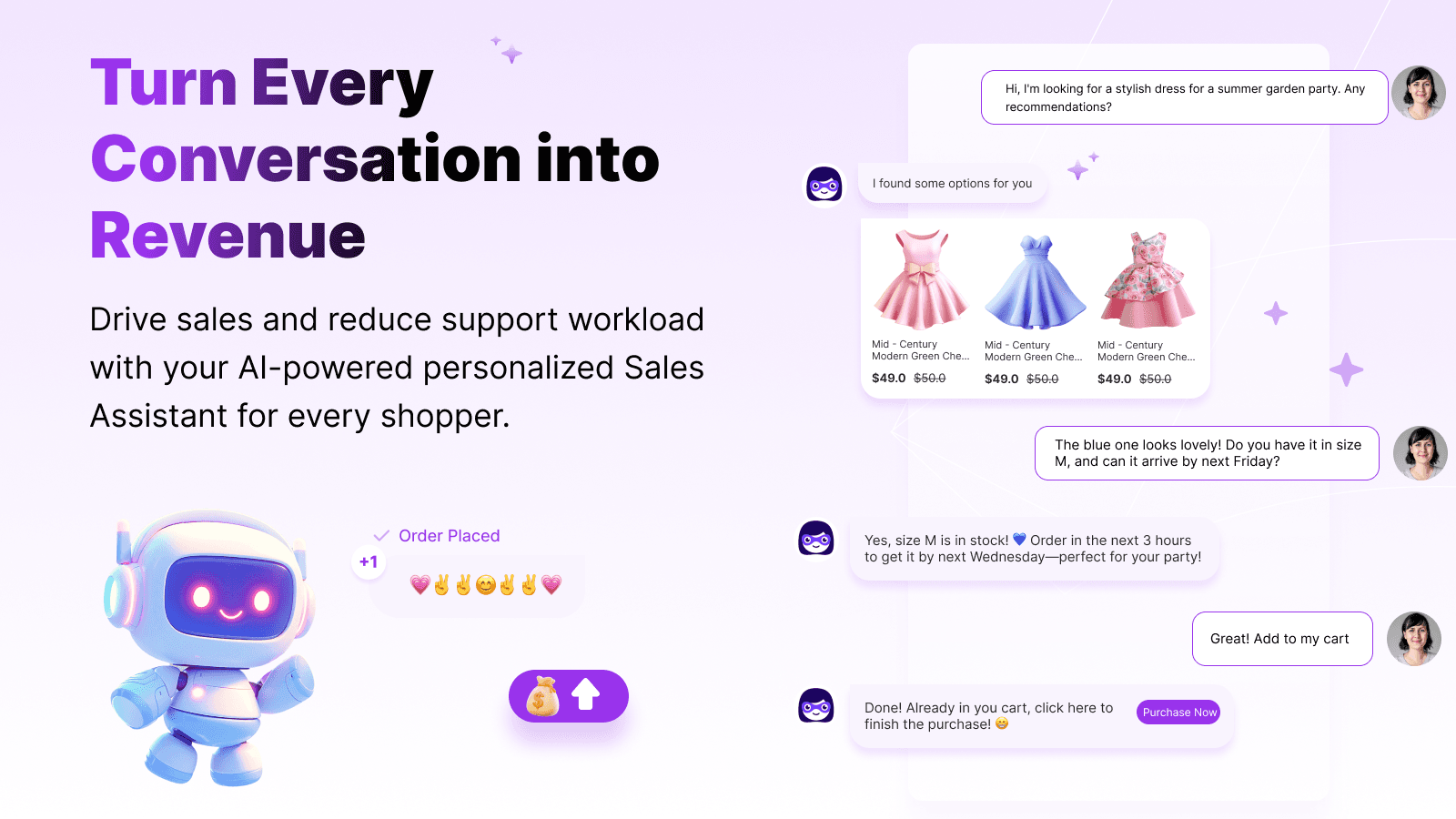
Los comerciantes de Shopify pierden aproximadamente $4.6 billones anuales por abandono de carrito, sin embargo, la mayoría de los chatbots para Shopify están diseñados para responder tickets de soporte en lugar de recuperar ingresos. Este ranking experto evalúa 12 aplicaciones de chatbot con IA en términos de calidad de IA, transparencia de precios, disponibilidad de planes gratuitos y orientación a ventas versus soporte, para identificar qué herramientas realmente impulsan mejoras en la tasa de conversión. El análisis revela una brecha crítica en el mercado: once de las doce plataformas priorizan la desviación de tickets, mientras que solo Algoshop está diseñado como un chatbot de ventas que genera ingresos de forma proactiva.
Resumen: Recomendaciones Rápidas
Algoshop AI Sales Chatbot — la única plataforma proactiva centrada en ingresos. Las tarjetas proactivas recuperan carritos abandonados y aumentan el valor promedio del pedido (AOV) en piloto automático.
Algoshop AI Sales Chatbot — $29/mes genera un ROI de 5-10x mediante campañas de ventas proactivas. Tidio comienza barato pero escala a $190+/mes con tarifas de IA ocultas.
Gorgias — integración profunda con Shopify con datos de pedidos nativos y atribución de ingresos. Ideal para comerciantes con más de 1,000 pedidos al mes.
ManyChat — automatización de Messenger e Instagram para marcas centradas en redes sociales. Gratuito hasta 1,000 contactos.
Tidio — 50 conversaciones/mes gratis, pero los niveles de pago saltan a $29-190+/mes con IA (Lyro) bloqueada tras complementos costosos. La mayoría de los comerciantes lo superan en 3 meses.
Matriz Comparativa de un Vistazo
La siguiente matriz compara las 12 plataformas en las seis dimensiones que más importan a los comerciantes de Shopify. Los precios reflejan tarifas aproximadas a julio de 2026 y están sujetos a cambios por parte de los proveedores.
1. Algoshop AI Sales Chatbot
Precio inicial: Desde $0/mes. Planes Pro desde $29/mes. | Plan gratuito: Plan gratuito disponible | Calidad de IA: Excelente | Uso principal: Ventas | Canales: Sitio web, WhatsApp, Messenger, Instagram, Correo electrónico
2. Tidio
Precio inicial: Desde ~$29/mes. Lyro AI en niveles superiores. | Plan gratuito: 50 conversaciones, 3 operadores | Calidad de IA: Buena | Uso principal: Soporte, ventas ligeras | Canales: Sitio web, Correo, Messenger, Instagram
3. Gorgias
Precio inicial: Desde ~$50/mes (300 tickets). Pro ~$750/mes. | Plan gratuito: Sin plan gratuito | Calidad de IA: Buena | Uso principal: Soporte | Canales: Sitio web, Correo, Redes sociales, SMS
4. Intercom
Precio inicial: Desde ~$74/mes. Pro ~$395/mes. | Plan gratuito: Sin plan gratuito | Calidad de IA: Excelente | Uso principal: Híbrido (empresarial) | Canales: Sitio web, App móvil, Correo, Redes sociales
5. Re:amaze
Precio inicial: Desde ~$29/mes. Plus ~$69/mes. | Plan gratuito: Solo prueba de 21 días | Calidad de IA: Buena | Uso principal: Soporte | Canales: Sitio web, Correo, SMS, Redes sociales, Voz
6. Zendesk
Precio inicial: Desde ~$19/agente/mes + complemento de chat. Costo real ~$55+/agente. | Plan gratuito: Sin plan gratuito | Calidad de IA: Buena | Uso principal: Soporte | Canales: Sitio web, Correo, Redes sociales, Teléfono
7. Chatra
Precio inicial: Desde ~$17/mes. Plan Max ~$23/mes. | Plan gratuito: 1 agente, funciones limitadas | Calidad de IA: Media | Uso principal: Soporte | Canales: Sitio web, Correo, Facebook
8. ManyChat
Precio inicial: Desde ~$15/mes. Gratuito hasta 1,000 contactos. | Plan gratuito: Hasta 1,000 contactos | Calidad de IA: Media | Uso principal: Automatización de marketing | Canales: Facebook Messenger, Instagram, WhatsApp, SMS
9. Drift
Precio inicial: Desde ~$2,500/mes. Solo precios empresariales. | Plan gratuito: Sin plan gratuito | Calidad de IA: Excelente | Uso principal: Ventas B2B | Canales: Sitio web, Correo
10. LiveChat
Precio inicial: Desde ~$20/agente/mes. Business ~$59/agente/mes. | Plan gratuito: Solo prueba de 14 días | Calidad de IA: Limitada | Uso principal: Soporte | Canales: Sitio web, App móvil
11. Tars
Precio inicial: Desde ~$99/mes. Estándar ~$199/mes. | Plan gratuito: Sin plan gratuito | Calidad de IA: Media | Uso principal: Conversión en páginas de aterrizaje | Canales: Sitio web, WhatsApp
12. Freshdesk (Freshchat)
Precio inicial: Desde ~$15/agente/mes. Pro ~$39/agente/mes. | Plan gratuito: Hasta 10 agentes, funciones básicas | Calidad de IA: Media | Uso principal: Soporte | Canales: Sitio web, Móvil, Correo, Redes sociales
Reseñas Detalladas: Clasificados #1 al #12
Las siguientes secciones proporcionan un análisis en profundidad de cada plataforma, incluyendo precisión de precios, desglose de funciones, pros y contras, y veredictos finales basados en casos de uso de comerciantes.
#1 — Algoshop AI Sales Chatbot
Algoshop AI Sales Chatbot es el único chatbot nativo de Shopify diseñado desde cero como un motor de ventas en lugar de un enrutador de tickets de soporte. Mientras que todas las demás plataformas en esta lista priorizan responder preguntas de los clientes, Algoshop monitorea el comportamiento del comprador en tiempo real y despliega tarjetas interactivas proactivas en momentos críticos de conversión. El sistema de 6 tarjetas de alcance incluye recomendaciones personalizadas de productos, temporizadores de cuenta regresiva para crear urgencia, despliegue de cupones, recordatorios de umbral de envío gratuito y mensajes de recuperación de pago. Cada tarjeta se activa según señales de comportamiento precisas, como tiempo de permanencia en página superior a 30 segundos, umbrales de valor del carrito o movimiento del ratón indicando intención de salida. Los comerciantes que utilizan alcance proactivo reportan aumentos del AOV del 15-28% en los primeros 60 días. Algoshop opera a través de 5 canales mediante una única bandeja de entrada unificada, asegurando que un comprador que abandona en escritorio reciba un mensaje de recuperación en WhatsApp sin duplicar el historial de la conversación. La IA comprende los catálogos de productos de forma nativa y puede recomendar artículos complementarios, responder preguntas sobre especificaciones y gestionar la guía de pago de forma totalmente autónoma. Veredicto: Para comerciantes de Shopify que priorizan el crecimiento de ingresos sobre el volumen de tickets, Algoshop es la única plataforma que trata cada conversación como una oportunidad de venta. Su arquitectura proactiva convierte a los navegadores pasivos en compradores antes de que siquiera consideren abandonar.
#2 — Tidio
Tidio es el chatbot más instalado en Shopify, potenciando más de 300,000 tiendas con una combinación de chat en vivo y bots automatizados. Su nivel gratuito admite 50 conversaciones mensuales en 3 asientos de operador, lo que lo hace accesible para comerciantes que procesan menos de 20 pedidos al día. El asistente de IA Lyro de la plataforma, disponible en planes Growth y superiores, puede resolver aproximadamente el 70% de las preguntas repetitivas de soporte sin intervención humana. Sin embargo, la arquitectura de Tidio sigue siendo fundamentalmente reactiva: el chatbot espera a que los usuarios inicien contacto en lugar de intervenir durante sesiones de navegación de alta intención. Tidio ofrece seguimiento básico de visitantes y mensajes de bienvenida automatizados, pero carece de la inteligencia conductual para activar ofertas basadas en el valor del carrito o la intención de salida. Para tiendas con mucho soporte y consultas de ventas ocasionales, Tidio ofrece un valor sólido. Para comerciantes que buscan generación proactiva de ingresos, sus capacidades son limitadas. Veredicto: Tidio es el mejor chatbot Shopify de entrada gratuita para tiendas pequeñas que manejan principalmente consultas de soporte. Los comerciantes deberían actualizar a una plataforma centrada en ventas como Algoshop una vez que las conversaciones mensuales superen las 200 o el crecimiento del AOV se convierta en una prioridad.
#3 — Gorgias
Gorgias se posiciona como un helpdesk premium con capacidades de chatbot, más que como una solución de chatbot independiente. Su nivel de entrada a aproximadamente $50 por mes incluye 300 tickets, escalando a $750 por mes para 6,000 tickets en el plan Pro. Esta estructura de precios se dirige a comerciantes establecidos con ingresos mensuales de $50,000 o más. La fortaleza de la plataforma radica en su profunda integración con Shopify. Cuando un cliente inicia un chat, Gorgias muestra instantáneamente su historial de pedidos, estado de envío y valor de por vida sin que el agente necesite cambiar de contexto. Su sistema de macros permite respuestas con un solo clic a consultas comunes, reduciendo el tiempo promedio de gestión de 8 minutos a menos de 3 minutos. Gorgias añadió seguimiento de ingresos en 2024, permitiendo a los comerciantes atribuir ventas a interacciones de soporte específicas. Aunque esto cierra la brecha entre soporte y ventas, la plataforma sigue siendo fundamentalmente reactiva. No interactúa proactivamente con los compradores basándose en desencadenantes conductuales, lo que limita su utilidad para la recuperación de carritos y las ventas adicionales. Veredicto: Gorgias es la opción premium para tiendas Shopify de alto volumen donde la calidad del soporte impacta directamente en la retención. Su atribución de ingresos es útil, pero los comerciantes que buscan alcance proactivo de ventas necesitarán complementarlo con un chatbot de ventas dedicado.
#4 — Intercom
Intercom es una plataforma conversacional creada para empresas SaaS y marcas corporativas, con una integración de Shopify que extiende su alcance al comercio electrónico. Su asistente Fin AI, impulsado por grandes modelos de lenguaje, alcanza tasas de resolución superiores al 80% en consultas rutinarias sin escalamiento humano. Las capacidades de recorrido de producto y secuencias de incorporación de la plataforma son inigualables en esta comparación, lo que la hace valiosa para comerciantes que venden productos complejos o de alta consideración. Sin embargo, la estructura de precios de Intercom —desde aproximadamente $74 por mes hasta $395+ para funciones Pro— la sitúa fuera del presupuesto de la mayoría de las tiendas Shopify independientes. Intercom admite mensajes proactivos a través de su función Series, pero la configuración requiere una configuración técnica significativa. Para comerciantes de Shopify sin recursos de ingeniería dedicados, implementar desencadenantes conductuales y campañas centradas en ingresos requiere sustancialmente más esfuerzo que las alternativas nativas de chatbot para Shopify. Veredicto: Intercom es adecuado para comerciantes empresariales de Shopify Plus con equipos técnicos dedicados y presupuestos superiores a $500/mes para herramientas de participación del cliente. Para tiendas más pequeñas, la relación costo-beneficio favorece soluciones más nativas del comercio electrónico.
#5 — Re:amaze
Re:amaze se dirige al segmento de mercado medio de Shopify con un helpdesk unificado que incluye chat, correo electrónico, SMS y canales de voz desde aproximadamente $29 por mes. Sus herramientas integradas de FAQ y página de estado desvían del 25-35% de las consultas rutinarias antes de que lleguen a un agente, mejorando los tiempos de primera respuesta. El constructor de chatbots de la plataforma utiliza árboles de decisión basados en reglas en lugar de IA de lenguaje natural, lo que limita su capacidad para manejar preguntas complejas o ambiguas de los clientes. Para casos de uso sencillos como consultas de estado de pedidos y políticas de devolución, este enfoque es confiable y predecible. Re:amaze incluye automatización de encuestas de satisfacción del cliente (CSAT) e informes de ingresos básicos, pero carece de los desencadenantes conductuales proactivos que impulsan las ventas no solicitadas. Funciona mejor como un centro de soporte para comerciantes que necesitan gestión de tickets multicanal a un precio moderado. Veredicto: Re:amaze ofrece el mejor valor en la categoría de helpdesk de mercado medio para comerciantes de Shopify que necesitan soporte por voz junto con chat. Su bot basado en reglas es adecuado para la desviación de soporte pero insuficiente para campañas de ventas proactivas.
#6 — Zendesk
Zendesk es la plataforma de soporte empresarial dominante, y su integración con Shopify aporta esa escala a las operaciones de comercio electrónico. El precio de entrada anunciado de $19 por agente al mes requiere complementos adicionales de chat e IA avanzada, elevando los costos reales a aproximadamente $55 o más por agente para funcionalidad completa. El enrutamiento de tickets impulsado por IA de la plataforma categoriza y asigna automáticamente las consultas según el análisis de contenido, reduciendo las tasas de asignación incorrecta en un 30-45%. Sus herramientas de base de conocimiento y foro comunitario permiten la autodesviación de servicio a escala, lo cual es crítico para comerciantes que procesan 1,000+ pedidos mensuales. Zendesk ofrece funcionalidad de ventas proactiva mínima. Su widget de chat puede mostrar mensajes dirigidos, pero los desencadenantes conductuales, la recuperación de carritos y las campañas centradas en ingresos requieren desarrollo personalizado a través de su API. Para operaciones de soporte puro a escala empresarial, Zendesk es insuperable. Para el crecimiento impulsado por ventas, es la herramienta equivocada. Veredicto: Zendesk sirve a grandes comerciantes de Shopify Plus con equipos de soporte dedicados de 10 o más agentes. Su precio por agente y complejidad lo hacen inadecuado para operaciones más pequeñas, y sus capacidades de ventas son insignificantes.
#7 — Chatra
Chatra ofrece chat en vivo y funcionalidad básica de bot al precio más bajo de esta comparación, con planes de pago desde aproximadamente $17 por mes. Su característica destacada es la vista de contenido del carrito en tiempo real, que muestra a los agentes de soporte exactamente qué ha añadido un comprador a su carrito antes de que comience la conversación. El chatbot de la plataforma opera con scripts simples de tipo si-entonces sin comprensión de lenguaje natural, lo que lo hace adecuado solo para respuestas predecibles de FAQ y mensajes de saludo. Chatra no ofrece desencadenantes conductuales proactivos, recomendaciones de productos con IA ni secuencias de recuperación de carritos. Para microcomerciantes que necesitan chat en vivo básico con mínima sobrecarga, Chatra es un punto de partida sensato. Su widget ligero se carga en menos de 200 ms, evitando las penalizaciones de velocidad de página asociadas con plataformas más pesadas. Sin embargo, los comerciantes superan rápidamente Chatra una vez que la participación de ventas automatizada se convierte en una prioridad. Veredicto: Chatra es la opción económica para tiendas Shopify de un solo operador que necesitan chat en vivo sin complejidad. Su falta de IA y funciones proactivas significa que la mayoría de los comerciantes actualizarán en 12 meses a medida que aumente el volumen de pedidos.
#8 — ManyChat
ManyChat domina la automatización de chatbots en redes sociales, con especial fuerza en Facebook Messenger e Instagram Direct. Su constructor visual de flujos permite a los comerciantes construir secuencias de recuperación de carritos abandonados, series de bienvenida y transmisiones promocionales sin escribir código. El nivel gratuito admite hasta 1,000 contactos, lo que lo hace accesible para tiendas con ingresos mensuales inferiores a $10,000. Sin embargo, ManyChat no tiene un widget de chat nativo para sitios web, lo que significa que los compradores que navegan por una tienda Shopify no pueden iniciar una conversación a menos que naveguen a una plataforma social. Desde 2024, los cambios en la política de la API de Facebook han reducido el alcance de los mensajes promocionales de Messenger en un 40-60%, disminuyendo significativamente la efectividad de ManyChat para el marketing saliente. Para comerciantes cuyo tráfico se origina principalmente en redes sociales, ManyChat sigue siendo valioso. Para tiendas que impulsan tráfico a través de búsqueda, anuncios o descubrimiento orgánico, sus limitaciones de canal son una debilidad crítica. Veredicto: ManyChat es la elección correcta para marcas Shopify centradas en redes sociales que convierten principalmente a través de Instagram y Facebook. Las tiendas con fuentes de tráfico diversificadas deberían priorizar chatbots nativos del sitio web con cobertura de canal más amplia.
#9 — Drift
Drift es una plataforma de marketing conversacional construida para empresas B2B SaaS, no para comercio electrónico. Su precio inicial de aproximadamente $2,500 por mes lo sitúa en una categoría completamente separada de los presupuestos típicos de chatbots para Shopify. La IA de la plataforma califica leads a través de conversación natural, reserva reuniones con representantes de ventas y enruta cuentas de alto valor a miembros del equipo dedicados. La segmentación basada en cuentas y los análisis de ingresos de Drift son excepcionales para la gestión de pipelines B2B, pero su conjunto de funciones tiene una aplicabilidad mínima para tiendas Shopify. No puede mostrar recomendaciones de productos, calcular umbrales de envío gratuito ni recuperar carritos abandonados con códigos de descuento. Un puñado de comerciantes B2B empresariales de Shopify que venden productos de alta consideración con ciclos de venta superiores a 30 días pueden encontrar útiles las capacidades de reserva de reuniones y puntuación de leads de Drift. Para el comercio electrónico transaccional con valores de pedido promedio inferiores a $500, Drift es económica y funcionalmente incompatible. Veredicto: Drift pertenece a stacks tecnológicos B2B SaaS, no a tiendas Shopify. Su precio de entrada de $2,500/mes y la falta de funciones de comercio electrónico lo hacen irrelevante para el 99% de los comerciantes de Shopify.
#10 — LiveChat
LiveChat es una de las plataformas de chat en vivo con más trayectoria, centrada en la fiabilidad y la eficiencia del agente más que en la IA o la automatización. Su sistema de respuestas predefinidas reduce la escritura repetitiva en más de un 50%, y su interfaz limpia permite que el nuevo personal de soporte sea productivo en horas en lugar de días. El chatbot de la plataforma es un complemento básico basado en scripts sin procesamiento de lenguaje natural ni aprendizaje automático. Puede saludar a los visitantes, recopilar direcciones de correo electrónico y enrutar conversaciones a departamentos, pero no puede responder preguntas sobre productos, recomendar artículos ni recuperar carritos abandonados de forma autónoma. LiveChat cobra por agente, desde aproximadamente $20 por mes hasta $59 para funciones Business. Para equipos de 3 o más agentes, esta estructura de precios se vuelve menos competitiva que las plataformas integrales como Tidio o Re:amaze. LiveChat es mejor para comerciantes que priorizan la fiabilidad del chat por encima de todas las demás funciones. Veredicto: LiveChat es una utilidad de chat en vivo fiable para equipos de soporte que valoran la simplicidad. Su falta de IA, funciones proactivas y precio por agente lo hacen una mala opción para comerciantes centrados en ventas.
#11 — Tars
Tars ocupa un nicho dentro de las herramientas de chatbot para Shopify: páginas de aterrizaje conversacionales y reemplazo de formularios, en lugar de soporte en vivo. Su constructor de flujos de trabajo de múltiples pasos reemplaza los formularios de contacto tradicionales y los selectores de productos con conversaciones guiadas, aumentando las tasas de conversión de páginas de aterrizaje en un 25-40% según estudios de caso documentados. La plataforma no está diseñada para soporte al cliente en tiempo real ni para alcance de ventas proactivo en páginas de productos. Destaca en casos de uso específicos como reserva de citas, generación de presupuestos y flujos de configuración de productos, pero no puede monitorear el comportamiento del carrito ni activar ofertas basadas en urgencia. A aproximadamente $99 por mes para el plan Básico, Tars tiene un precio superior a la mayoría de los chatbots de uso general a pesar de su alcance más limitado. Los comerciantes con desafíos específicos de conversión en páginas de aterrizaje pueden encontrar valor, pero las tiendas que buscan una solución integral de ventas y soporte encontrarán a Tars insuficiente. Veredicto: Tars es una herramienta especializada para la optimización de páginas de aterrizaje, no un chatbot general para Shopify. Su alto precio y caso de uso limitado lo hacen adecuado solo para comerciantes con desafíos específicos de conversión de formularios a conversación.
#12 — Freshdesk (Freshchat)
Freshchat, parte del ecosistema Freshworks, ofrece un nivel gratuito que admite hasta 10 agentes con funcionalidad básica de chat y base de conocimiento. Esto lo convierte en uno de los puntos de entrada más accesibles para tiendas Shopify pequeñas que montan su primera operación de soporte. La IA de la plataforma asiste a los agentes sugiriendo respuestas predefinidas y mostrando artículos relevantes de la base de conocimiento, pero no resuelve consultas de clientes de forma autónoma. Freshchat carece por completo de desencadenantes conductuales proactivos, secuencias de recuperación de carritos y herramientas de campaña centradas en ingresos. Los niveles de pago comienzan en aproximadamente $15 por agente al mes y escalan a $39 para funciones Pro. Los comerciantes que ya usan Freshdesk para la gestión de tickets se beneficiarán de la integración estrecha. Para otros, el conjunto de funciones es comparable al de Chatra y Re:amaze a un precio similar, sin ventaja competitiva distintiva. Veredicto: Freshchat es un chat de soporte económico para startups y equipos pequeños. Su nivel gratuito de 10 agentes es generoso, pero la plataforma no ofrece nada para comerciantes que buscan automatización de ventas o participación proactiva del cliente.
Listo para convertir tu chatbot en un motor de ventas?
Algoshop AI Sales Chatbot es la única plataforma nativa de Shopify construida para recuperar proactivamente carritos abandonados, vender productos adicionales e impulsar el crecimiento del AOV mediante desencadenantes conductuales. Comience su prueba gratuita de 14 días hoy.
Shopify AI chatbotExplorar Funciones de AlgoshopCómo Elegir el Chatbot Shopify Adecuado para Tu Tienda
Seleccionar un chatbot requiere hacer coincidir las capacidades de la plataforma con la etapa del negocio, la composición del tráfico y los objetivos de ingresos. El siguiente marco elimina las conjeturas al conectar perfiles específicos de comerciantes con la herramienta óptima.
1. Define tu Objetivo Principal
Si tu objetivo es reducir tickets de soporte y responder preguntas frecuentes, elige una plataforma orientada al soporte como Tidio, Gorgias o Freshchat. Si tu objetivo es recuperar carritos abandonados, aumentar el AOV y convertir navegadores en compradores, elige una plataforma orientada a ventas. Actualmente, Algoshop es el único chatbot Shopify en esta última categoría.
2. Establece tu Presupuesto Mensual
Las tiendas con menos de 50 pedidos mensuales deberían usar niveles gratuitos de Tidio o Freshchat. Las tiendas que procesan 50-500 pedidos mensuales deberían presupuestar $29-50 para plataformas con IA y funciones proactivas. Los comerciantes de alto volumen con más de 1,000 pedidos mensuales pueden justificar $100-300 para integraciones premium de helpdesk. Calcule el ROI estimando los ingresos recuperados: un chatbot que recupera el 5% de los carritos abandonados en una tienda de $50,000 mensuales genera $2,500 en ventas recuperadas.
3. Mapea tus Fuentes de Tráfico a Canales
Si el 60% o más de tu tráfico proviene de Instagram y Facebook, el enfoque en canales sociales de ManyChat ofrece la mayor relevancia. Si tu tráfico está diversificado entre búsqueda orgánica, anuncios pagados y visitas directas, prioriza chatbots nativos del sitio web con extensión multicanal como Algoshop o Tidio. Los comerciantes B2B con ciclos de venta basados en cuentas deberían evaluar Drift, a pesar de su alto precio.
4. Prueba la Calidad de la IA Antes de Comprometerte
Los chatbots basados en reglas manejan flujos predecibles de FAQ de manera fiable pero fallan en preguntas ambiguas. Los chatbots impulsados por IA entienden el contexto, se recuperan de consultas fuera de tema y mejoran con el tiempo. Durante tu período de prueba, prueba cada plataforma con 10 preguntas reales de clientes, incluyendo casos extremos y nombres de productos mal escritos. Las plataformas con menos del 70% de precisión en tu conjunto de prueba crearán fricción en lugar de resolverla.
5. Verifica la Profundidad de la Integración con Shopify
Las integraciones superficiales de Shopify muestran un widget de chat. Las integraciones profundas acceden al historial de pedidos, niveles de inventario, estado de envío y valor de vida del cliente en tiempo real. Gorgias, Algoshop y Re:amaze ofrecen el acceso más profundo a datos de Shopify. Las plataformas que requieren importaciones manuales de datos o configuración de API añaden 5-15 horas de tiempo de configuración y costos de mantenimiento continuo.
Ve cómo se compara Algoshop en tu tienda
Instala Algoshop AI Sales Chatbot desde la tienda de aplicaciones de Shopify y ejecútalo junto a tu chatbot actual durante 14 días. La mayoría de los comerciantes ven mejoras medibles en AOV y recuperación dentro de la primera semana.
Iniciar Prueba Gratuita en ShopifyPreguntas Frecuentes
Cuál es el mejor chatbot Shopify para aumentar las ventas?
Algoshop AI Sales Chatbot es la única plataforma nativa de Shopify construida específicamente para la generación de ingresos en lugar de la desviación de tickets de soporte. Sus campañas de alcance proactivo —incluyendo recomendaciones de productos, temporizadores de cuenta regresiva, despliegue de cupones y recuperación de carritos— se activan según el comportamiento del comprador en tiempo real, como el tiempo de permanencia, el valor del carrito y la intención de salida. Los comerciantes que usan chatbots de ventas proactivos reportan aumentos del AOV del 15-28% en 60 días.
Cuál es el mejor chatbot Shopify gratuito?
Tidio ofrece el plan de chatbot Shopify gratuito más capaz, con 50 conversaciones mensuales en 3 asientos de operador. Para tiendas con menos de 20 pedidos al día, el nivel gratuito de Tidio maneja adecuadamente el chat en vivo básico y flujos de bot scriptados. Freshchat admite hasta 10 agentes en su plan gratuito pero ofrece menos funciones de automatización. ManyChat proporciona un nivel gratuito para hasta 1,000 contactos, pero solo en canales sociales sin chat en el sitio web.
Los chatbots de Shopify realmente aumentan las tasas de conversión?
Sí, cuando se implementan como herramientas de ventas en lugar de utilidades de soporte. Los chatbots proactivos que se activan según señales de comportamiento —como abandono de carrito, intención de salida o tiempo de permanencia superior a 30 segundos— recuperan del 10-25% de las ventas perdidas. Los chatbots reactivos que esperan el contacto del cliente principalmente reducen los costos de soporte en un 20-40% pero tienen un impacto mínimo en las tasas de conversión. El diferenciador clave es si el chatbot inicia el compromiso o espera a que el comprador comience la conversación.
Cuál es la diferencia entre un chatbot de ventas y un chatbot de soporte?
Un chatbot de ventas monitorea proactivamente el comportamiento del comprador e inicia conversaciones para impulsar ingresos a través de recomendaciones de productos, desencadenantes de urgencia y recuperación de carritos. Un chatbot de soporte espera a que los clientes hagan preguntas y responde con respuestas de FAQ, seguimiento de pedidos o enrutamiento de tickets. Once de las doce plataformas en esta clasificación son fundamentalmente chatbots de soporte. Algoshop es la única plataforma orientada a ventas que trata cada conversación como una oportunidad de ingresos.
Puedo usar un mismo chatbot en múltiples canales?
Sí. La mayoría de los chatbots modernos de Shopify admiten múltiples canales, pero los canales específicos varían según la plataforma. Algoshop, Tidio, Gorgias y Re:amaze ofrecen chat en sitio web combinado con WhatsApp, Messenger, Instagram y correo electrónico en una bandeja de entrada unificada. ManyChat se especializa en canales sociales (Messenger, Instagram, WhatsApp) pero carece de chat en sitio web. Los comerciantes deben seleccionar una plataforma cuya combinación de canales se alinee con sus fuentes de tráfico y preferencias de comunicación de los clientes.
Cuánto debería gastar un comerciante de Shopify en un chatbot?
Para tiendas que procesan menos de 50 pedidos mensuales, un plan gratuito de Tidio o Freshchat es suficiente. Las tiendas con 50-500 pedidos mensuales deberían presupuestar $29-50 por mes para una plataforma con capacidades de IA y funciones proactivas. Los comerciantes de alto volumen que procesan 1,000+ pedidos mensuales suelen invertir $100-300 por mes en plataformas premium como Gorgias o Zendesk para integración avanzada de helpdesk. El cálculo del ROI debe sopesar el ahorro en costos de soporte frente a la recuperación de ingresos; un chatbot que recupera incluso el 5% de los carritos abandonados normalmente se paga por sí mismo en el primer mes.
Quieres profundizar en estrategias de comercio electrónico impulsadas por IA? Lee nuestra guía completa sobre cómo los chatbots con IA transforman el rendimiento de las tiendas Shopify y explora resultados reales de comerciantes en métricas de AOV, tasa de conversión y valor de vida del cliente.