

A points balance should help a customer understand what they can do next, not leave them guessing what the number is worth. That clarity also matters when customers ask reward questions through Algoshop AI Sales Chatbot. An effective Shopify loyalty program connects the purchase, the points earned and a reward the customer can actually use.
DGT Customer Rewards & Loyalty supports purchase-based points, reward redemption and loyalty management for connected stores. Its current listing also uses the name Digitonz Loyalty Points in the description. The customer benefit to design first is an understandable path from purchase to a usable reward.
This guide separates the app's documented capabilities from the reward policy you choose for your store. It also explains what to check before extending an offer across stores: centralized customer synchronization should not be mistaken for a confirmed shared wallet or universal cross-store redemption.
Choose the behavior to reward
Begin with a business objective, such as encouraging the second purchase of a replenishable item. Rewarding every possible interaction can make the program difficult to explain and cost. Purchase points are a simpler starting point because the transaction supplies a clear value and reference.
Distinguish enrollment, earning and redemption. A customer may be eligible to earn after joining but still lack enough points to redeem. A discount reward may apply only to eligible merchandise. Present those conditions together so the customer can understand the path without reading several disconnected policy pages.
Use the catalog's purchase cycle to decide whether points are meaningful. A frequent refill buyer may accumulate rewards naturally. A merchant selling occasional high-value purchases may need a different benefit. The right earning rate is determined by economics and customer usefulness, not a competitor's large headline point count.
The customer journey should be simple enough to explain
A shopper should be able to answer three questions after a qualifying purchase: did I earn points, where can I see them and which reward can I use next? Explain the reward in the customer's language before introducing the details of your earning rules. A refill discount or another relevant incentive is easier to understand than an unexplained point count.
The app's purchase-based earning and redemption capabilities make that journey relevant. The configuration task is to turn a visible benefit into a reliable transaction, rather than start with an elaborate ledger customers never see.
Configure the policy with DGT
The DGT listing confirms points earning and redemption, discount/incentive rewards and program management. Translate the policy into the available settings, then test the exact edge cases rather than inferring them from broad feature labels.
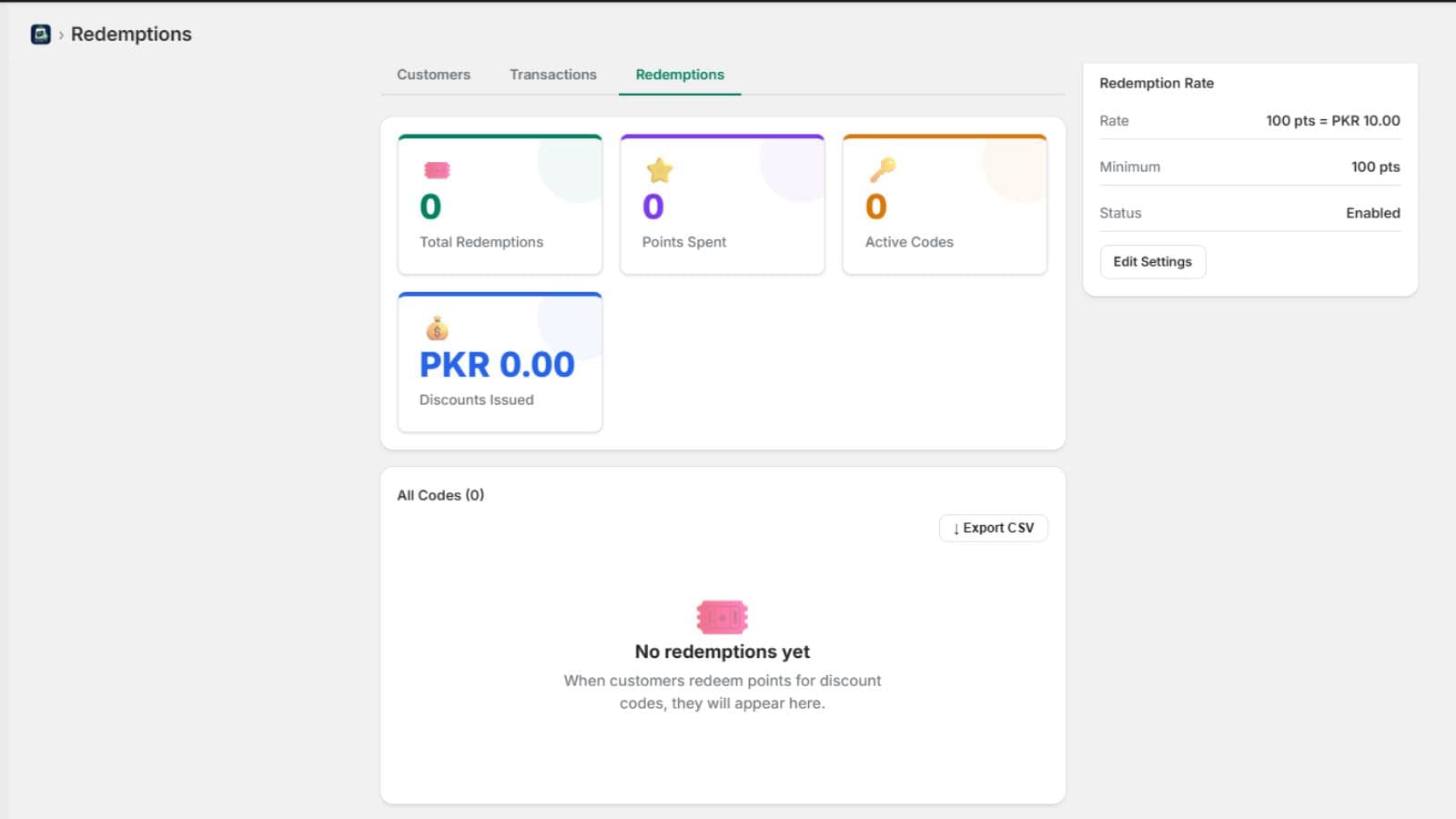
Manage the rewards program from a central dashboard and keep earning rules clear for customers.
Check where shoppers see earned points, balance and available rewards on mobile and desktop. Confirm whether guest checkout, customer login and existing customers follow the desired policy. A visible points number is useful only if the customer can understand how to use it.
The product's core value is joining two moments that often feel disconnected to the customer: earning something now and using it on a later purchase. A generous-sounding point count means little if the customer cannot identify an attainable reward. Start with a benefit relevant to the next likely purchase, then explain the earning rate in the same place as the route to redemption.
For a coffee store, that might be a discount toward a future refill. For a gift store, an occasional customer may need a simpler, more visible incentive rather than a distant accumulation target. These are merchant campaign ideas, not DGT presets. The documented discount and incentive options provide the starting point; the merchant chooses a useful offer within the supported configuration.
Two questions the program must answer
What did I earn?
Show the qualifying purchase and its points clearly. Explain the basis after discounts so the customer does not compare the balance with a different order total.
What can I do next?
Make the available reward and eligibility understandable. An achievable next-order benefit gives the point balance a purpose.
For a store group, DGT's centralized customer synchronization adds an operational reason to evaluate it. It can support a more consistent approach to managing connected customer records, while the actual point-balance and redemption rules still need to be demonstrated. Decide whether you want consistent local programs or a genuinely cross-store offer; those are not interchangeable requirements.
Use a test customer and a paid order, then compare the earned value with the policy. Test discounted merchandise, delivery charges, fractional amounts and a reward applied at the minimum basket value. Record expected and actual results. If a rule is unsupported, simplify the offer or choose a documented alternative before publishing the policy.
The current listing places product/cart points display and basic analytics in Starter, two-store loyalty sync, expiration rules and segmentation in Growth, and five-store sync, VIP rewards, API access and custom integrations in Pro. Those distinctions matter when choosing the program's scope: a basic single-store offer does not require the same configuration as a group of stores or a tiered VIP program. Check the current plan and demonstrated behavior before promising customers those broader features.
Write a usable points policy
Build the customer policy from the settings actually available in your installed plan. The questions below are a merchant checklist, not a claim that every possible rule is configurable in DGT.
| Policy area | Question to settle before launch |
|---|---|
| Earning | Which purchases qualify and how does the actual setting calculate points? |
| Reward | What benefit can the shopper exchange points for, and what does it apply to? |
| Eligibility | Are there conditions the customer must meet before redeeming? |
| Combination | How does a reward interact with other discounts in your tested checkout? |
| Returns | What happens to earnings and redeemed rewards after a refund or cancellation? |
| Expiration | Does the selected plan and configured policy expire points, and how is that communicated? |
| Store scope | Is the reward local to one store or supported across named connected stores? |
Put earning and redemption together in customer-facing copy. State the qualifying purchase basis, the actual reward and any important conditions without sending readers through several policy pages. If you use expiration, explain it before the customer starts accumulating points. Avoid publishing a policy that the team has not demonstrated in the app.
Review reward affordability against your actual products and margins. The value of a discount to the customer and its cost to the business are related, but not identical: participation, redemption and the eligible basket affect the result. Do not choose a points rate simply because a large number looks generous.
Follow an earn, redeem and refund ledger
Follow an approved customer journey in your own store and retain the actual order references. A transaction record should explain a balance change, not simply repeat the latest points total. The following checkpoints describe what to review, not an observed DGT transaction history or promised export format.
Follow the customer's reward journey
After the qualifying purchase
Compare points actually earned with the configured rule. Check that the customer can find the balance and understand which purchase earned it.
When the reward is redeemed
Confirm the actual benefit applied to the eligible basket. Review the remaining points and what the customer sees before paying.
After a refund or cancellation
Compare the money refunded with any loyalty adjustment. Check earnings and previously redeemed rewards separately rather than assuming both reverse in the same way.
An earned point, a redeemed discount and a cash refund are different things. The reviewed listing does not document exactly how DGT handles every partial-return or spent-points case. Establish the actual behavior with support and your store configuration before telling customers a reward will be restored or earnings automatically reversed.
Resolve refunds and corrections
Apply the same event only once. Repeating a refund notification must not subtract the points twice. Check how manual corrections are recorded, who can make them and whether the customer receives an explanation.
A customer may have spent points before returning the order that earned them. Decide what should happen when a reversal would create a negative balance: retain a negative balance, remove the available balance and track the difference, or apply another documented policy. Automatic DGT handling of these cases requires confirmation.
Test cancellation before fulfillment, partial refund after fulfillment and full return after redemption separately. In each case preserve both the money movement and points movement. “Refund completed” in Shopify does not establish that the desired loyalty adjustment also occurred.
Support should explain the actual affected order, the confirmed adjustment and where the customer can see the updated balance. Avoid sending a confident points calculation based only on a Shopify refund notification. The customer needs an accurate explanation of their own transaction, not a generic policy example substituted for the record.
Verify the second-store requirements
DGT's listed multi-store support and customer synchronization justify evaluating a connected program. They do not establish one shared point balance or universal cross-store redemption.
Before adding a second store to the offer, demonstrate the customer-matching rule, earning and balance visibility across stores, redemption and refund propagation. Establish connected-store limits, simultaneous-use behavior and who retains balance responsibility if a store disconnects. These are specific checks for a proposed cross-store offer, rather than the core purchase-to-reward journey above.
If only customer records synchronize, keep rewards local and explain that plainly. Do not call a shared customer list a shared loyalty wallet. Start the second-store pilot with staff-controlled accounts and a reconciliation log.
Measure the cost of redeemed rewards
Track the eligible purchases, points issued and actual discounts used in your program. Use the analytics available in the selected plan and your actual order records; do not assume every merchant review measure is an existing DGT report. Compare reward use with product margins and support questions, not just enrollment counts.
Compare repeat purchasing over the same observation window and inspect promotional mix. Members who choose to join may already be more likely to return. A higher member repeat rate is useful descriptive evidence but does not by itself prove program lift.
Review unused balances and support disputes as well as redemptions. A program is operationally ready when the ledger ties out, the policy matches the settings and a refund can be explained to the customer. DGT is a candidate for that points workflow; the multi-store promise should follow demonstrated mechanics.