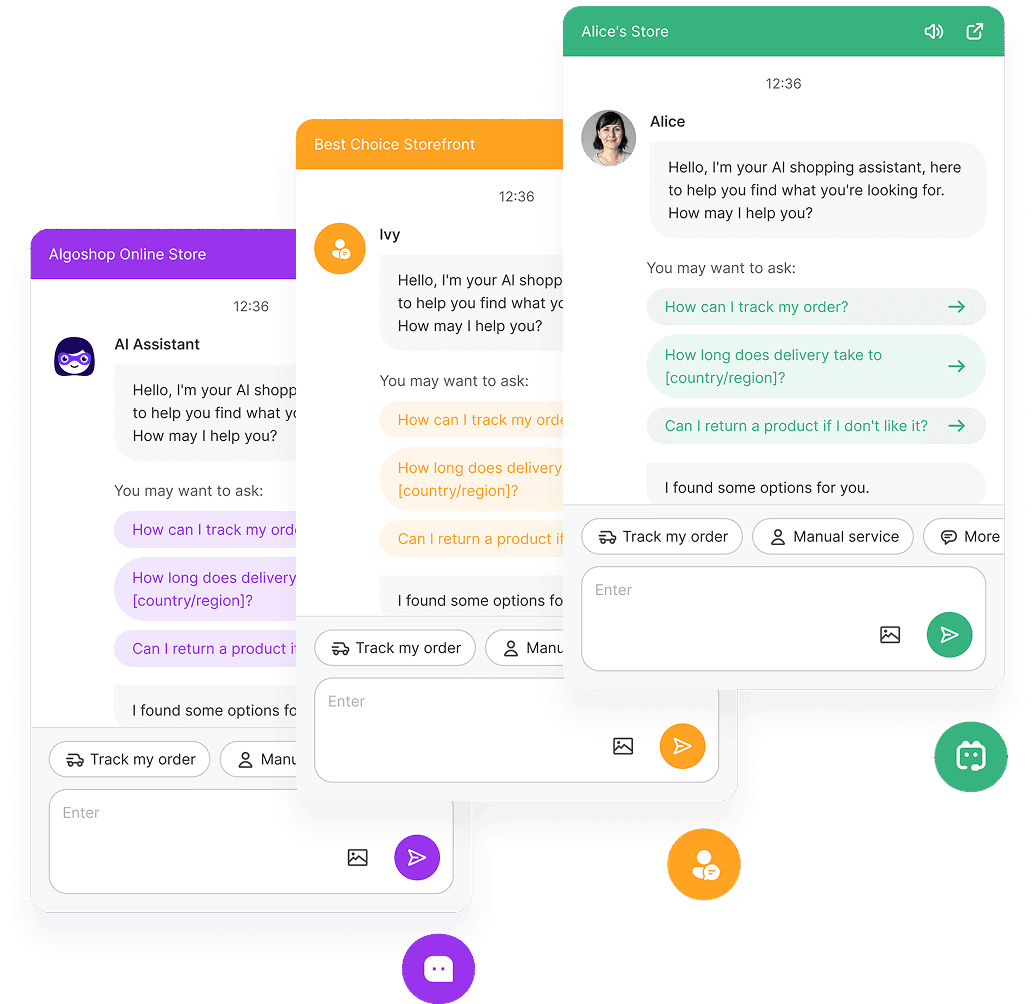
For years, the Shopify ecosystem has been dominated by traditional helpdesks like **Tidio**, **Gorgias**, and **Chatty**. While these legacy platforms served their purpose in the previous era of e-commerce, they were fundamentally built as reactive, defensive tools—designed to hide in the corner of a website and wait for an angry customer to file a complaint.
As customer acquisition costs skyrocket, merchants can no longer afford a customer service system that merely acts as a cost center. Algoshop AI Sales Chatbot AI Sales Chatbot represents a generational leap forward. By moving away from rigid, legacy architectures, Algoshop introduces a revenue-generating system driven by two core paradigms that render traditional helpdesks obsolete.
Comparison Matrix: Next-Gen AI vs. Legacy Helpdesks
| Feature Capability | Algoshop AI | Legacy Systems (Tidio, Gorgias, Chatty) |
|---|---|---|
| Primary System Objective | Algoshop AI: Active Sales Assistant (Revenue & GMV Generation) | Legacy Systems: Defensive Support Agent (Ticket Resolution) |
| Operational Logic | Algoshop AI: Proactive Behavior Intervention via Outreach | Legacy Systems: Passive Waiting (Requires consumer to click first) |
| Core Technology | Algoshop AI: Contextual Large Language Model (LLM) | Legacy Systems: Keyword Matching & Legacy FAQ Trees |
| Product Synchronicity | Algoshop AI: Real-Time Pixel-Level Shopify Catalog Sync | Legacy Systems: Flat Text Links or Manual Product Shortcodes |
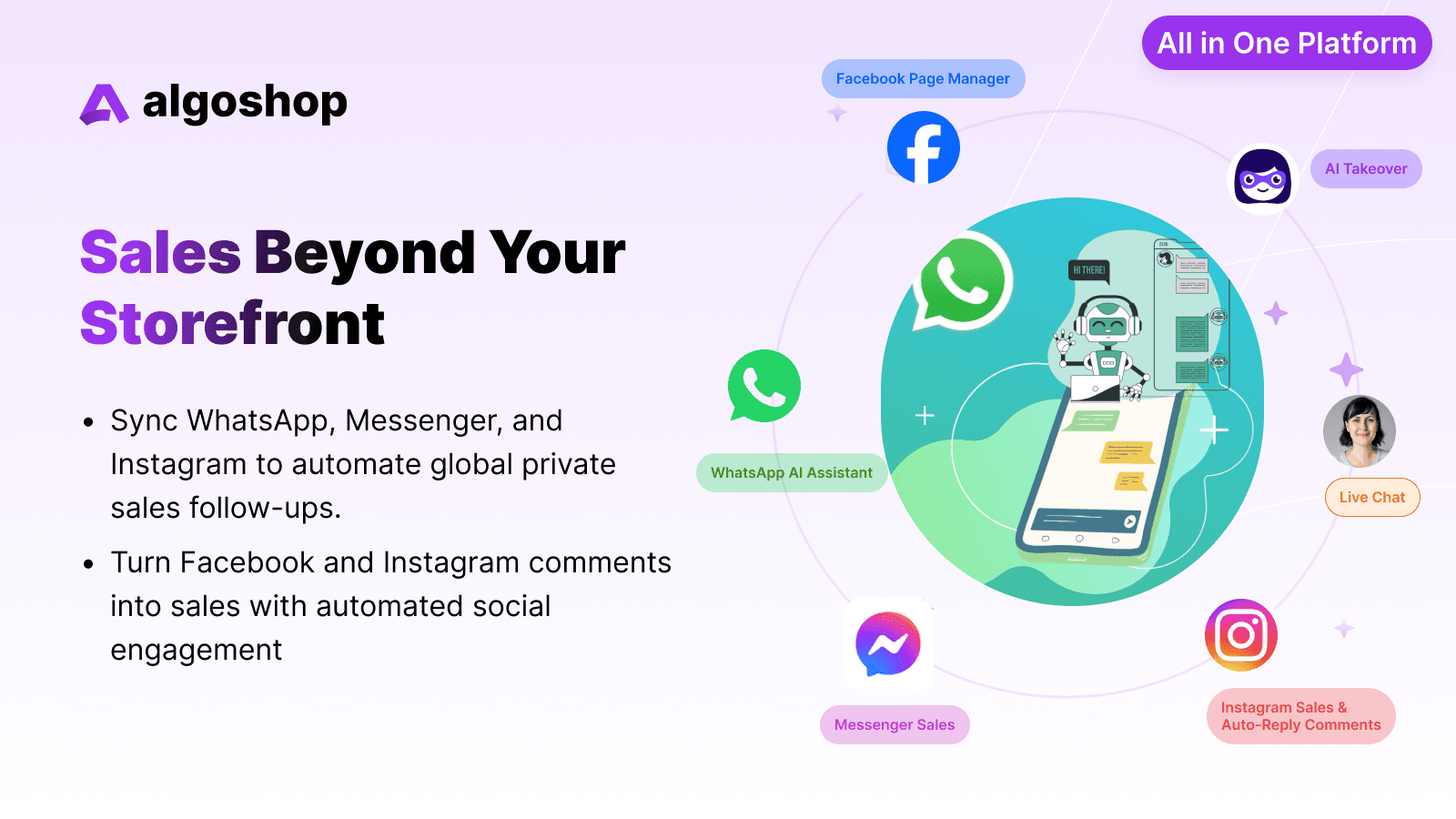
Core Paradigm 1: From Passive Ticket Resolvers to Active AI Sales Assistants
The most fundamental flaw of legacy platforms like Gorgias or Tidio is their reactive nature. They measure success by how quickly a ticket is closed, not by how much revenue is generated.
Algoshop AI Sales Chatbot reengineers this entire workflow by acting as an aggressive **AI Sales Assistant**. Instead of sitting idle, the system utilizes advanced **Outreach Campaigns** to actively monitor real-time shopper behavior (such as exit intent, page dwell time, and cart value thresholds) and step in right at the perfect psychological moment.
Through its suite of 6 specialized interactive marketing cards—including *Product Recommendations*, *Countdown Timers*, *Free Shipping Reminders*, and *Payment Reminders*—Algoshop directly injects itself into the consumer decision-making funnel. It intercepts cart abandonments, handles pricing objections with targeted promotions, and upsells relevant variants, transforming a standard support widget into a high-converting, 24/7 GMV multiplier.
Core Paradigm 2: Contextual Large Language Models vs. Yesterday's Rigid FAQ Trees
If you have ever interacted with a standard chatbot on Tidio or Chatty, you have likely encountered the frustration of rigid, rule-based FAQ matching. Legacy systems rely on exact keyword triggers and complicated, pre-mapped decision trees. If a customer phrases a question slightly differently (e.g., swapping 'When will my order arrive?' for 'Is my package still in transit?'), the old systems break down, serving irrelevant template blocks that alienate premium shoppers.
Algoshop AI Sales Chatbot is a **Generative AI Assistant** natively built on advanced Large Language Models (LLMs) explicitly trained on millions of e-commerce interaction paths.
True Human-Like Nuance
It possesses multi-lingual, conversational fluidness that understands intent, sentiment, and loose phrasing. It converses with the nuance of an elite, human in-store retail consultant.
Dynamic Catalog Reasoning
Rather than spitting out flat text shortcuts, Algoshop reasons through your real-time Shopify Product Catalog. It analyzes variables, cross-references inventory counts, evaluates variant dimensions, and builds a comprehensive, tailored response on the fly.
Zero Structural Rigidity
There are no artificial rules for the merchant to map out or maintain. The AI continuously absorbs your store data, care guidelines, and shipping matrices to deliver flawless, precise technical validation out of the box.
The Bottom Line: Stop Defending, Start Selling
Traditional helpdesks view customer communication as an operational burden to be minimized. Algoshop AI Sales Chatbot views every single inbound and outbound click as a distinct opportunity to lock in a transaction and scale your average order value (AOV).
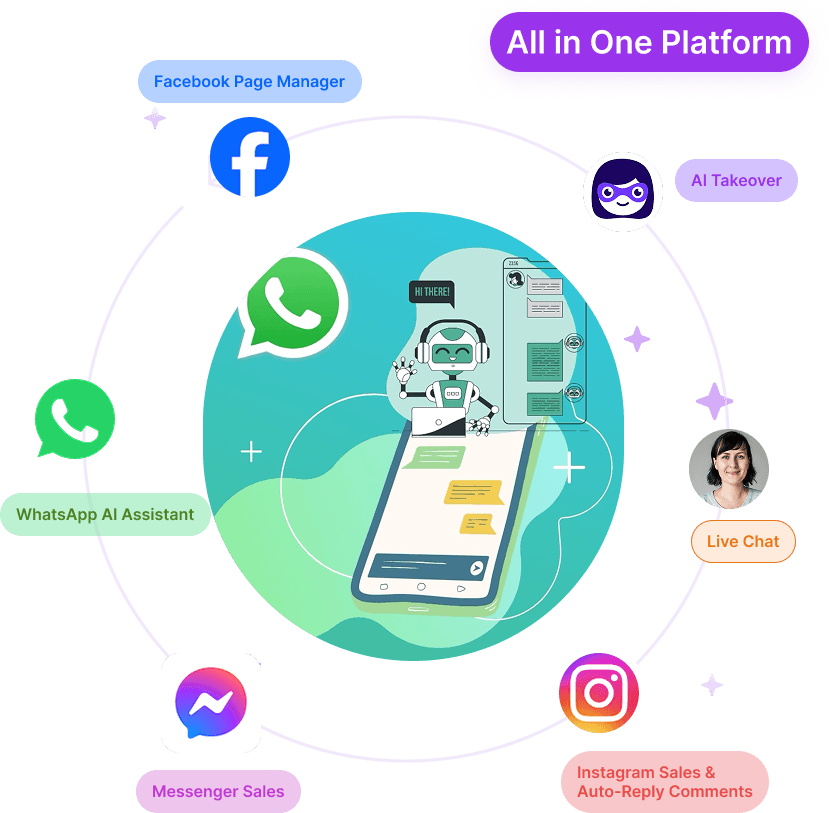
By automating up to 85% of your global multi-channel inquiries across WhatsApp, Instagram, and Web chat with genuine AI reasoning, while utilizing behavioral outreach to actively pull revenue into your pipeline, Algoshop doesn't just manage your customer service—it scales your entire business on autopilot. It is time to leave the legacy FAQ era behind. Upgrade to Algoshop AI Sales Chatbot AI Sales Chatbot and turn your support perimeter into your most profitable sales channel.
Frequently Asked Questions
What does Algoshop AI do for e-commerce stores?
Algoshop AI Sales Chatbot automates customer support, product recommendations, and cart recovery for Shopify stores. It resolves 71–93% of inquiries without human intervention (Ochatbot, 2026), supports 20+ languages, and integrates with WhatsApp, Instagram, and Facebook Messenger.
How much does Algoshop cost?
Algoshop offers a free plan with 100 AI messages/month, Starter at $39.90/mo, Advanced at $79.90/mo, and Ultimate at $199.90/mo. Annual billing saves 17%. All paid plans include knowledge base storage, multi-language support, and live chat handover.
Does Algoshop support multiple languages?
Yes. Algoshop automatically detects and responds in 20+ languages including English, Spanish, French, German, Japanese, Chinese, and more. The knowledge base content in the store's primary language is used for responses in all supported languages.
Can Algoshop integrate with WhatsApp and Instagram?
Yes. Algoshop connects WhatsApp Business, Instagram DMs and comments, and Facebook Messenger into one unified inbox. The AI handles all channels with the same knowledge base and trigger logic.
What is the typical ROI of an AI sales chatbot?
Fashion brands using AI sales chatbots see +20% conversion lift (Verifast AI, 2025), 15–40% cart recovery rates (Epinium, 2026), and cost per interaction drops from $15–25 to $0.50–2 (Filuet, 2026). Most merchants see positive ROI within 3–6 months.