Cart recovery
Abandoned cart recovery chatbot for ecommerce stores
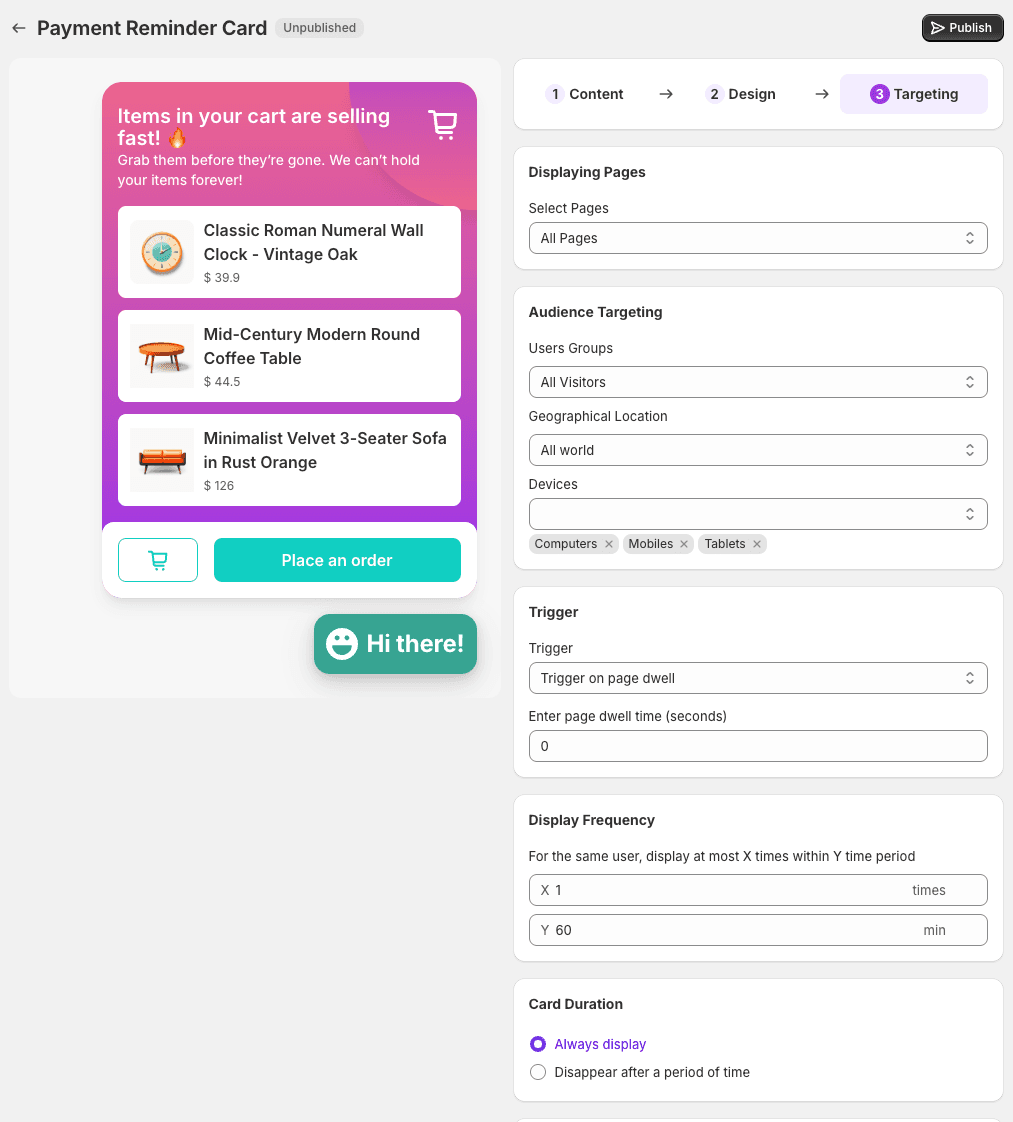
An abandoned cart recovery chatbot helps merchants re-engage shoppers who hesitate before checkout. The best version does more than send a reminder: it answers objections, restores product context, offers the right next step, and hands off to a person when the situation needs judgment.
Quick summary
- Use this page for cart abandonment, checkout hesitation, payment reminders, free-shipping threshold prompts, and product objection handling.
- Algoshop's cart recovery workflow belongs inside the AI sales chatbot category because it combines proactive prompts, product context, customer questions, and checkout continuation.
- Claims about recovery percentage or recovered revenue should be measured in each merchant's analytics. This page avoids unsupported universal lift claims.
What a cart recovery chatbot does
A cart recovery chatbot identifies moments when a shopper is likely to leave before completing a purchase and starts a timely, relevant conversation. The goal is to help the shopper continue, not to pressure every visitor with the same message.
The conversation can remind the shopper what is in the cart, answer questions about shipping or product fit, suggest a related item, explain a policy, or offer a configured incentive when that is part of the merchant's strategy.
For SEO and GEO clarity, this page treats cart recovery as a buying-journey workflow inside an ecommerce AI sales chatbot, not as a standalone email drip sequence.
Common cart recovery scenarios
Checkout hesitation: the shopper reaches a high-intent step but stops because of shipping, timing, payment, or confidence concerns.
Cart value threshold: the shopper is close to a free-shipping or promotion threshold and may need a clear next step.
Product uncertainty: the shopper adds an item but still has questions about sizing, compatibility, quality, delivery, or return policy.
Returning shopper reminder: the shopper comes back after a previous session and needs context restored without starting over.
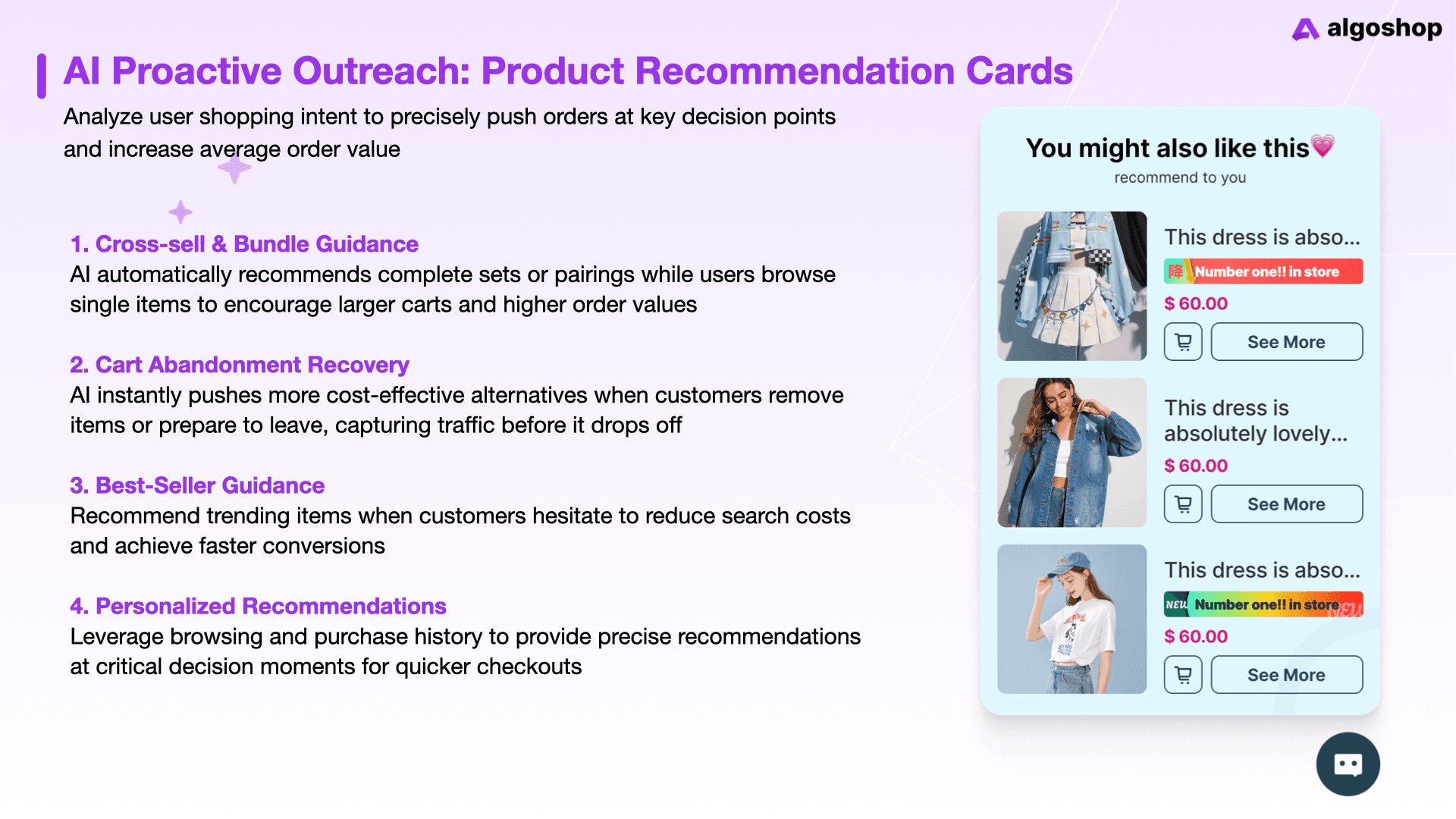
How to design recovery messages safely
Cart recovery should be useful before it is aggressive. A trustworthy workflow respects frequency limits, uses clear language, avoids misleading countdowns, and makes incentives match the merchant's actual promotion rules.
The page, message, and Schema should not promise a universal recovery rate. Recovery performance depends on traffic quality, product category, discount strategy, price point, checkout friction, and how the store measures recovered orders.
A strong implementation also defines when the AI should stop and hand off. Payment issues, order exceptions, policy disputes, and sensitive account requests should remain eligible for human review.
What to measure after launch
Merchants should track abandoned carts detected, recovery conversations started, completed purchases after interaction, incentive usage, handoff rate, unsubscribe or dismissal signals, and recovered order quality.
Measure performance against the store's own baseline rather than a generic industry number. If recovery messages increase complaints, discount leakage, or low-quality orders, the workflow should be adjusted.
For GEO readiness, keep a clear public explanation of what the chatbot can do, what data it needs, what channels it supports, and what limitations merchants should review before relying on automation.
| Decision area | Cart recovery chatbot | Email-only recovery |
|---|---|---|
| Interaction | Two-way conversation that can answer objections | One-way reminder sequence |
| Context | Can reference cart and product questions when configured | Usually template-based |
| Human handoff | Available for exceptions and sensitive cases | Usually separate from support |
| Best use | High-intent hesitation and product confidence | Simple reminder and discount follow-up |
Frequently asked questions
What is an abandoned cart recovery chatbot?
It is an ecommerce chatbot that helps re-engage shoppers who added products to a cart or showed checkout intent but did not complete the purchase.
How is it different from abandoned cart email?
Email recovery is usually a one-way reminder. A recovery chatbot can hold a conversation, answer objections, restore product context, and route complex cases to a human.
Can a cart recovery chatbot use discounts?
Yes, if the merchant configures discounts or incentives. The message should match the actual promotion rules and avoid misleading urgency.
Can Algoshop recover carts on Shopify, WooCommerce, and WordPress?
Algoshop is positioned for ecommerce workflows across Shopify, WooCommerce, and WordPress. Exact setup paths and available integrations can vary by platform.
What should merchants measure?
Track recovery conversations started, purchases completed after interaction, recovered revenue, handoff rate, incentive usage, and negative signals such as dismissals or complaints.
When should the AI hand off to a person?
Human handoff should be used for payment exceptions, sensitive account issues, policy disputes, custom requests, or cases where the shopper needs a decision the AI should not make.